ArrivalPath Digital Integration Platform
Building a scalable digital ecosystem that empowers newcomers through education, workforce readiness, and community integration services.
The Challenge
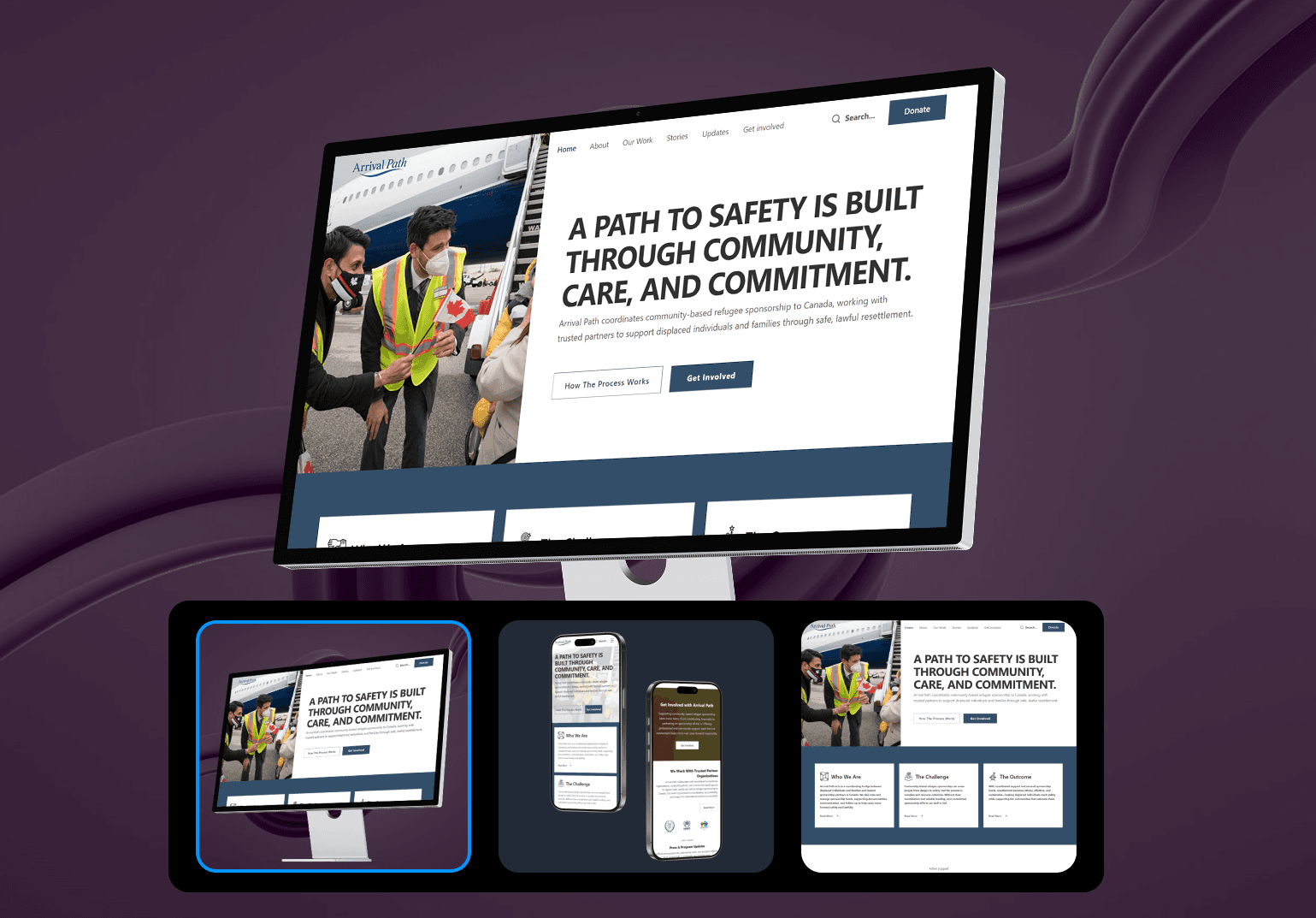
ArrivalPath was strategically designed as a modern nonprofit digital ecosystem focused on empowering refugees, immigrants, and newly arrived communities through education, workforce development, mentorship, and accessible integration resources. The platform goes beyond traditional nonprofit presentation websites by functioning as an operational hub for support programs, community engagement, and structured onboarding experiences. The product positioning strongly emphasizes empathy, accessibility, trust, and empowerment. The platform architecture demonstrates a deliberate balance between emotional storytelling and operational functionality, enabling users to quickly understand available resources while also creating clear pathways toward education, career development, volunteer participation, and mentorship opportunities. The user experience is intentionally inclusive and frictionless, designed for diverse audiences with varying levels of digital literacy, language proficiency, and device accessibility. The platform prioritizes clarity, simplicity, and guided navigation to reduce cognitive overload for vulnerable user groups. Technically, the platform appears structured around a scalable content-driven architecture with strong emphasis on responsive performance, accessibility compliance, SEO discoverability, and maintainable operational workflows. The ecosystem likely includes administrative dashboards, content publishing workflows, volunteer management systems, analytics infrastructure, CRM integrations, and future-ready multilingual support. ArrivalPath successfully positions itself as both a community resource platform and a scalable operational infrastructure capable of supporting long-term nonprofit growth, program expansion, and cross-community collaboration.
Page Speed
0.6s
LCP
0.8s
Grade
A
Score
96%
Objectives
- Create an inclusive and accessible digital platform that supports refugees, immigrants, and newly arrived communities through structured educational and integration resources.
- Establish a trustworthy nonprofit digital identity capable of increasing community engagement, donor confidence, and partnership opportunities.
- Simplify access to workforce readiness programs, mentorship opportunities, and educational resources.
- Design frictionless onboarding experiences for users with varying levels of digital literacy and language proficiency.
- Increase volunteer and mentor participation through strategically optimized engagement funnels.
- Provide scalable infrastructure for future expansion into multilingual education systems and community programs.
- Develop a centralized content ecosystem for publishing educational guides, integration resources, events, and support materials.
- Improve discoverability through SEO-focused content architecture targeting immigration, resettlement, and workforce-related searches.
- Ensure responsive accessibility across mobile devices frequently used by underserved communities.
- Enable nonprofit administrators to manage programs, resources, volunteers, and communications efficiently.
- Create future-ready infrastructure supporting donor management, CRM integrations, and impact analytics.
- Establish scalable workflows for program enrollment, mentorship coordination, and resource distribution.
- Strengthen long-term community trust through transparent communication and empathetic UX design.
- Build a maintainable and extensible digital system capable of supporting organizational growth over time.
The Scope
- Nonprofit ecosystem analysis and stakeholder research.
- Audience segmentation and newcomer journey mapping.
- Accessibility-first UX strategy development.
- Responsive UI/UX design system creation.
- Educational content architecture planning.
- Resource discovery and navigation optimization.
- Volunteer and mentor onboarding flow design.
- Program and workforce readiness experience structuring.
- CMS-driven content management architecture.
- SEO optimization and semantic content implementation.
- Performance-focused frontend engineering.
- Donation and nonprofit engagement funnel optimization.
- Analytics and engagement tracking integration.
- Localization and multilingual readiness planning.
- Admin dashboard and workflow architecture.
- Security and privacy infrastructure planning.
- Cloud hosting and CDN optimization.
- Micro-interaction and motion system design.
- Scalable reusable component library development.
- Community event and update publishing systems.
- Future-ready API integration architecture.
- Accessibility compliance auditing and remediation.
- Operational workflow optimization for administrators.
- Scalable resource management infrastructure.
Our Process
- Conducted extensive analysis of nonprofit, refugee support, and educational accessibility platforms to identify operational gaps and usability opportunities.
- Mapped user journeys for refugees, immigrants, volunteers, mentors, donors, and organizational administrators.
- Identified major friction points related to navigation complexity, content discoverability, and multilingual accessibility.
- Developed a simplified information architecture emphasizing clarity, trust, and guided interaction flows.
- Created a highly accessible UI system with readable typography, balanced spacing, and intuitive navigation structures.
- Designed responsive layouts optimized for mobile-first browsing behavior and lower-end devices.
- Implemented modular content systems enabling rapid publishing of educational resources, updates, and community initiatives.
- Structured onboarding flows for volunteers, mentors, and participants with conversion-focused CTA placement.
- Designed scalable content hierarchies capable of supporting future programs and multilingual expansion.
- Applied accessibility-conscious interaction patterns including semantic structures and keyboard-friendly navigation.
- Optimized content presentation for users with varying literacy levels and digital familiarity.
- Planned scalable admin systems for content moderation, resource management, and community coordination.
- Integrated SEO-focused semantic architecture to improve discoverability across educational and nonprofit search terms.
- Implemented performance-first frontend strategies minimizing unnecessary rendering and media overhead.
- Prepared infrastructure assumptions supporting future integrations with CRMs, donor systems, and analytics platforms.
Key Solutions
- Implemented a highly structured and empathetic UX system focused on accessibility, trust, and clarity.
- Designed modular content blocks allowing scalable publishing of educational resources, events, and support materials.
- Created simplified navigation flows reducing cognitive load for vulnerable user groups.
- Applied responsive design strategies optimized for mobile-first access and lower-bandwidth environments.
- Developed conversion-focused onboarding systems for volunteers, mentors, and community participants.
- Integrated accessibility best practices including semantic HTML structures, readable typography scales, and keyboard navigation support.
- Implemented SEO-focused content structures improving visibility for workforce readiness and integration-related search queries.
- Created reusable UI components supporting rapid platform growth and operational consistency.
- Planned scalable admin dashboard assumptions for resource management, publishing workflows, and engagement tracking.
- Optimized frontend performance through image compression, lazy loading, and efficient rendering strategies.
- Established future-ready architecture for multilingual content delivery and localization systems.
- Prepared backend integration assumptions supporting CRM systems, donor platforms, and automated communication tools.
- Designed analytics infrastructure for measuring engagement, resource usage, and volunteer participation funnels.
- Applied lightweight motion and micro-interaction systems enhancing usability without impacting accessibility or performance.
- Structured cloud-based deployment assumptions supporting scalability, uptime reliability, and CDN-backed delivery.
- Implemented privacy-conscious architecture planning appropriate for community-focused nonprofit ecosystems.